Mobility & Safety Support
Move safely.
Stay independent.
Fall prevention, transfer assistance, and movement support so your loved one can stay active and at home — on their own terms.
What does mobility and safety support include?
Falls are the leading cause of injury-related hospitalization among older adults — and fear of falling can be as limiting as falling itself. A Trinity caregiver trained in mobility support helps your loved one move through their day safely: standing up from chairs, navigating stairs, getting in and out of the car, and completing exercises their therapist has prescribed.
Mobility support isn't just physical. A caregiver who walks beside someone with a steady arm and a calm presence changes the whole experience of moving through the day. Clients tell us they feel more confident and more willing to move when they're not doing it alone.
What's included
- Transfer assistance (bed to chair, chair to standing)
- Safe ambulation support (walker, cane, or arm assistance)
- Fall prevention environment monitoring
- Assistance with prescribed home exercises
- Accompaniment on walks and community outings
- Guidance with wheelchair or mobility aid use

Who benefits most from mobility and safety support?
Mobility support is most valuable for clients recovering from a fall, a joint replacement, a stroke, or any event that has diminished their confidence or capacity to move independently. It also provides critical protection for those whose balance or coordination has declined with age.
Signs your loved one may need mobility support
These are the signs families notice most often before reaching out:
- Your loved one has fallen once in the past year
- They grip walls or furniture when moving around the home
- They've stopped going outside to avoid the risk of falling
- A doctor or physical therapist has noted fall risk in a recent visit
- They pause too long before standing — fear, not just caution
What mobility support looks like in practice
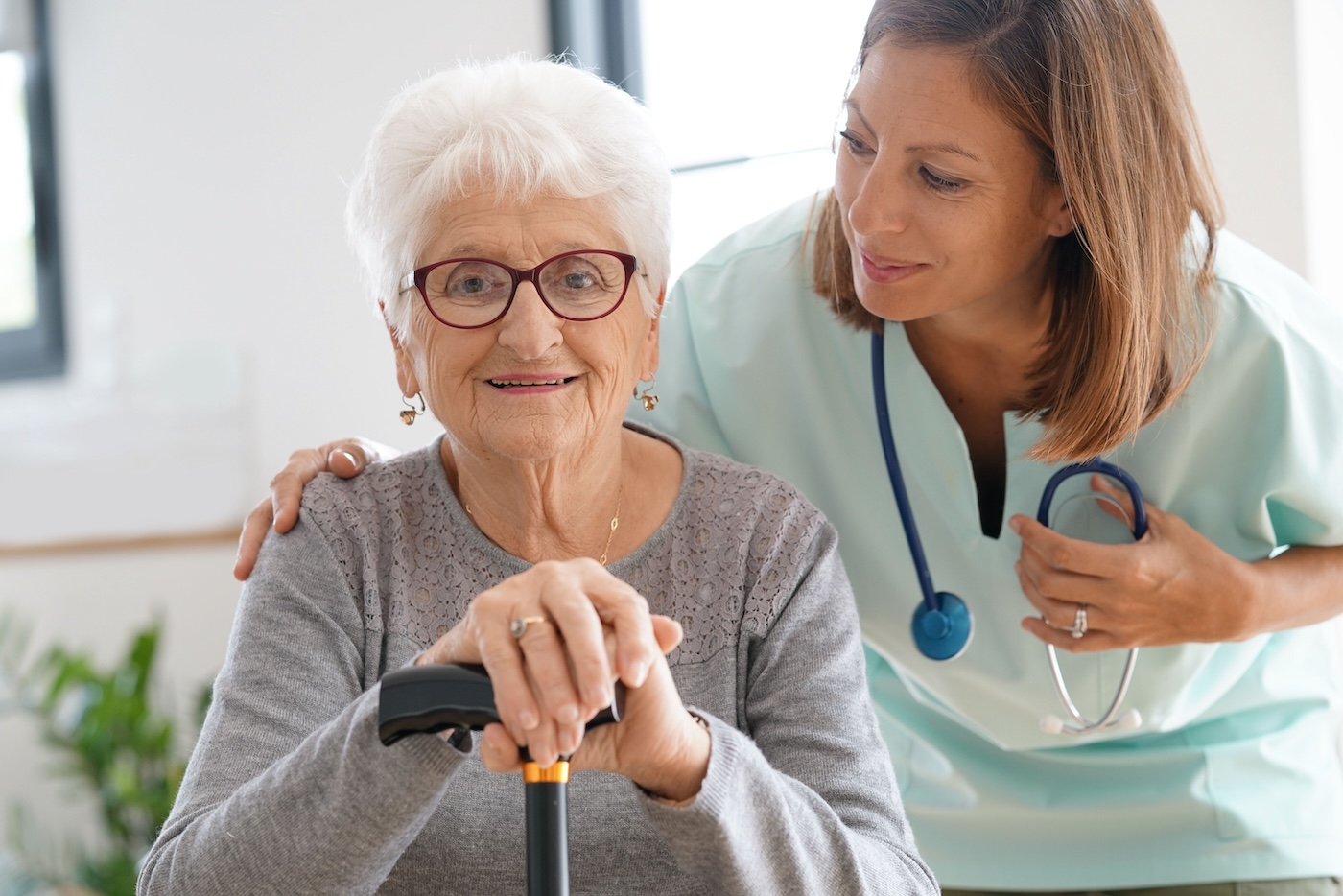
George had a hip replacement four months ago. He's mostly back to himself, but getting up from his recliner in the evening is still hard. When his caregiver is there, she stands in front of him, hands steady, and they do it together — three seconds, easy. When she's not there, George sometimes stays seated longer than he should just to avoid the moment. Trinity is working on extending the evening visit.
Family testimonial
"My husband had a stroke two years ago and he was terrified to walk. His caregiver worked with him slowly, never pushing, just steady and present. He's walking to the mailbox now. Six months ago I wouldn't have believed it."— Martha S., Pittsburgh, wife
Questions about mobility and safety support
Yes. All caregivers receive training in safe transfer techniques and body mechanics. For clients with complex mobility needs, we assess those needs during the in-home assessment and match accordingly.
Caregivers can support and encourage prescribed home exercises provided by a physical therapist, but they do not perform or modify therapy. We coordinate with the PT when needed.
Yes. As part of the in-home assessment, we note fall hazards — loose rugs, poor lighting, cluttered pathways — and bring them to the family's attention. We don't make modifications ourselves, but we make sure you know about them.
Start the conversation.
No pressure, ever.
We'll answer your questions and help you figure out what's right for your family.
412-345-3721No obligation. We typically respond within one business hour.